
Loss can change the way we see life. It can leave us with questions, memories, and emotions that are difficult to explain. We may continue with our daily responsibilities while carrying a quiet sadness inside. Sometimes we expect ourselves to recover quickly, but healing does not follow a fixed timetable.
For women of faith, restoring joy after loss does not mean pretending that nothing happened. It does not mean forgetting someone we loved, ignoring disappointment, or forcing ourselves to smile when our hearts are hurting. Restoring joy means allowing God to meet us in our pain and gradually lead us toward hope, peace, strength, and renewed purpose.
The Bible gives us a beautiful promise:
“Weeping may endure for a night, but joy cometh in the morning.” — Psalm 30:5 (KJV)
The morning may not arrive immediately. Sometimes we experience several difficult seasons before we begin to feel hopeful again. Yet God’s presence remains with us through every season.
As queens, daughters of the King, we can learn to walk through loss without allowing loss to become the definition of our lives.
Understanding Loss and the Journey of Healing
Loss comes in many forms. We can lose a loved one, a friendship, a marriage, an opportunity, a dream, financial security, a career, a home, or a season of life that we deeply valued.
Not every loss is visible to other people.
Someone may look strong on the outside while privately grieving something that mattered deeply to her. This is why we should never compare our healing journey with another person’s journey.
Grief is personal. Healing is personal.
We may experience sadness one day and hope the next. We may feel strong for several days and then find ourselves emotional because a memory reminds us of what we lost. These changes do not necessarily mean that we are going backward.
Healing often happens gradually.
We should give ourselves permission to acknowledge what happened while trusting God with what comes next.
God Is Near to the Brokenhearted
One of the most comforting truths in Scripture is that God does not abandon us when we are hurting.
Psalm 34:18 says:
“The Lord is close to the brokenhearted and saves those who are crushed in spirit.” — Psalm 34:18 (NIV)
When we experience loss, we may wonder where God is. Yet Scripture reminds us that God draws near to the brokenhearted.
We do not have to hide our emotions from Him.
We can pray honestly. We can tell God that we are disappointed. We can bring our questions to Him. We can admit that we do not understand what happened.
Faith does not require us to pretend that everything is fine.
Faith allows us to trust God even when everything does not feel fine.
Give Yourself Permission to Grieve
One of the most important steps toward restoring joy after loss is allowing ourselves to grieve.
We cannot heal what we refuse to acknowledge.
There may be pressure from society, family, friends, or even ourselves to “move on.” However, healing should not be measured by how quickly we stop feeling sadness.
We can acknowledge:
- What we lost
- What the loss meant to us
- How the loss affected us
- What we miss
- What we are afraid of
- What we hope God will restore
- What we need from God and trusted people
Ecclesiastes 3:4 reminds us that there is:
“A time to weep and a time to laugh, a time to mourn and a time to dance.” — Ecclesiastes 3:4 (NIV)
There is a season for mourning, but mourning is not the entire story.
Do Not Confuse Grief With Lack of Faith
Sometimes women of faith feel guilty because they are still sad.
We may think, “I should have more faith.”
But experiencing sadness after loss does not automatically mean that our faith is weak.
The Bible contains many examples of people who experienced deep sorrow while remaining faithful to God.
Jesus Himself wept when He encountered the grief surrounding Lazarus.
“Jesus wept.” — John 11:35 (NIV)
This short verse carries a powerful message: tears are not a failure of faith.
We can love God and still grieve.
We can trust God and still have difficult days.
We can believe in God’s promises and still need time to process what happened.
Faith gives us somewhere to take our pain.
Bring Your Pain to God Through Prayer
Prayer is one of the greatest gifts available to us during difficult seasons.
We do not need perfect words.
Sometimes our prayer may simply be, “Lord, help me.”
Sometimes we may sit quietly before God because we cannot explain what we feel.
Sometimes we may pray Scripture when our own words are difficult to find.
Psalm 55:22 gives us this encouragement:
“Cast your cares on the Lord and he will sustain you.” — Psalm 55:22 (NIV)
We can give God our worries repeatedly.
We can pray in the morning.
We can pray before sleeping.
We can pray while walking.
We can pray with trusted believers.
We can pray through tears.
The goal is not to impress God with our words. The goal is relationship, surrender, and trust.
Allow God’s Word to Renew Your Hope
When we experience loss, our thoughts can become dominated by what went wrong.
Scripture helps redirect our attention toward God’s character and promises.
Romans 15:13 says:
“May the God of hope fill you with all joy and peace as you trust in him.” — Romans 15:13 (NIV)
Notice the connection between trust, hope, joy, and peace.
Restoring joy is not simply about changing our circumstances. Sometimes it begins with allowing God’s Word to change what is happening within us.
We can create a simple Scripture routine.
Each day, we can read a short passage about:
- God’s faithfulness
- God’s presence
- Hope
- Peace
- Strength
- Wisdom
- God’s promises
- New beginnings
We can write down one verse that speaks to our current season and return to it throughout the day.
Remember That Your Loss Is Not Your Identity
After experiencing loss, it can become easy to define ourselves by what happened.
We may think:
“I am the woman who lost…”
But our circumstances do not determine our identity.
Our identity is deeper than our loss.
We remain God’s beloved creation.
We remain valuable.
We remain capable of growth.
We remain worthy of meaningful relationships.
We remain capable of serving others.
We remain capable of experiencing beautiful moments.
We remain capable of discovering new purpose.
Isaiah 43:19 says:
“See, I am doing a new thing! Now it springs up; do you not perceive it?” — Isaiah 43:19 (NIV)
God can create new possibilities without requiring us to deny the significance of what came before.
Find Small Reasons to Be Thankful Again
When our hearts are hurting, gratitude may feel difficult.
We do not need to begin with huge things.
We can start small.
We can be thankful for another morning.
We can appreciate a kind conversation.
We can notice the beauty of nature.
We can celebrate a meal.
We can appreciate a supportive friend.
We can thank God for strength to complete today’s responsibilities.
Small gratitude can become a pathway toward renewed joy.
1 Thessalonians 5:18 teaches:
“Give thanks in all circumstances; for this is God’s will for you in Christ Jesus.” — 1 Thessalonians 5:18 (NIV)
Giving thanks in difficult circumstances does not mean that we call the loss good. It means that we continue recognizing God’s goodness even while navigating something painful.
Reconnect With Healthy Community
Isolation can make difficult seasons feel even heavier.
We need people.
We need women who can listen without judging.
We need friends who can pray with us.
We need family members who can encourage us.
We need mentors who can offer wisdom.
We need church communities where we can worship and grow.
Galatians 6:2 says:
“Carry each other’s burdens, and in this way you will fulfill the law of Christ.” — Galatians 6:2 (NIV)
We should not feel ashamed of asking for support.
Being strong does not mean carrying everything alone.
Sometimes strength looks like knowing when we need someone to walk beside us.
Create Healthy Rhythms During Difficult Seasons
Loss can disrupt our normal routines.
We may struggle to focus. We may lose motivation. We may stop doing things that previously gave us structure.
Creating simple daily rhythms can help us regain stability.
We can focus on basic practices such as:
- Getting enough rest
- Eating regular, nourishing meals
- Staying connected with trusted people
- Spending time in prayer
- Reading Scripture
- Going outside
- Completing small responsibilities
- Making time for meaningful activities
- Taking appropriate breaks
- Asking for professional support when needed
We do not need to rebuild our entire lives in one day.
One healthy step at a time is still progress.
Release the Pressure to Have Everything Figured Out
After loss, we may become anxious about the future.
We may ask:
“What happens now?”
“Will life ever feel normal again?”
“Will I be happy again?”
“What does my future look like?”
We do not need to have every answer today.
Proverbs 3:5–6 reminds us:
“Trust in the Lord with all your heart and lean not on your own understanding.” — Proverbs 3:5–6 (NIV)
Trust means allowing God to lead us one step at a time.
We can focus on today’s responsibilities instead of demanding answers about every tomorrow.
Discover New Purpose After Loss
Loss can change our priorities.
Sometimes it causes us to recognize what truly matters.
We may discover a desire to help other women.
We may become more compassionate.
We may develop a new ministry.
We may return to a dream we had abandoned.
We may become more intentional about family and relationships.
We may discover gifts we previously overlooked.
Our new purpose does not erase our old pain.
Instead, God can use what we have learned through difficult seasons to help us serve others with greater compassion and wisdom.
2 Corinthians 1:3–4 says:
“The God of all comfort… comforts us in all our troubles, so that we can comfort those in any trouble.” — 2 Corinthians 1:3–4 (NIV)
Our story can eventually become a source of encouragement.
Learn to Celebrate Joy Without Feeling Guilty
One challenge after loss is feeling guilty when we begin enjoying life again.
We may laugh and then suddenly feel guilty.
We may enjoy an event and wonder whether we should be having fun.
We may experience a beautiful moment and remember what we lost.
But joy does not betray the past.
Experiencing happiness does not mean that we have forgotten.
We can remember someone or something important and still experience new joy.
There is room in our hearts for both remembrance and hope.
Psalm 126:5 says:
“Those who sow with tears will reap with songs of joy.” — Psalm 126:5 (NIV)
Joy can return gradually.
We should not be afraid of it when it does.
Stop Measuring Your Healing Against Someone Else’s
Every woman has a different story.
One person may recover quickly from one type of loss, while another may need more time. Neither experience should become the standard for everyone.
We should avoid statements such as:
- “You should be over it by now.”
- “Just move on.”
- “Everything happens for a reason.”
- “Other people have it worse.”
- “You need to be stronger.”
Instead, we can offer compassion.
We can listen.
We can pray.
We can remain present.
Healing is not a competition.
Seek Help When the Weight Becomes Too Heavy
Faith and professional support can work together.
There are seasons when talking with a trusted pastor, counselor, therapist, mentor, or another qualified professional can provide valuable support.
Seeking help is not a sign that we have failed spiritually.
Wisdom includes recognizing when we need additional support.
Proverbs 15:22 says:
“Plans fail for lack of counsel, but with many advisers they succeed.” — Proverbs 15:22 (NIV)
A strong queen understands that asking for help can be an expression of wisdom rather than weakness.
Choose Hope One Day at a Time
Hope does not always arrive as a dramatic transformation.
Sometimes hope looks like getting out of bed and beginning the day.
Sometimes it looks like praying again.
Sometimes it looks like accepting an invitation from a friend.
Sometimes it means returning to church.
Sometimes it means pursuing a small goal.
Sometimes it means believing that tomorrow can contain something good.
Lamentations 3:22–23 reminds us:
“Because of the Lord’s great love we are not consumed, for his compassions never fail. They are new every morning.” — Lamentations 3:22–23 (NIV)
Every morning gives us another opportunity to receive God’s mercy.
We do not have to solve our entire future today.
A Simple Prayer for Restoring Joy After Loss
Heavenly Father,
We come before You with hearts that have experienced loss, disappointment, and pain. You know the things we cannot explain and the memories we carry quietly.
Give us strength for today and hope for tomorrow. Help us to grieve honestly without losing sight of Your goodness. Teach us to trust You when we do not understand.
Restore our peace. Renew our minds. Surround us with people who encourage us, support us, and point us toward You.
Where our hearts have become tired, give us strength. Where we have lost hope, remind us of Your promises. Where we are afraid of the future, teach us to take the next step with faith.
Help us discover new purpose while honoring the experiences that have shaped us.
Lead us into a season of renewed joy, wisdom, compassion, and spiritual maturity.
In Jesus’ name, Amen.
Final Encouragement for Every Queen Walking Through Loss
Restoring joy after loss is not about returning to exactly who we were before.
Sometimes healing produces a deeper version of ourselves.
We may become more compassionate.
We may become wiser.
We may become more intentional.
We may become stronger in faith.
We may learn to appreciate ordinary moments.
We may develop greater empathy for people who are silently struggling.
Most importantly, we can discover that God remains faithful through every season of life.
The loss may be part of our story, but it does not have to be the final chapter.
We can mourn and still hope.
We can remember and still move forward.
We can experience difficult seasons and still believe in God’s goodness.
We can fall down emotionally and still rise again with God’s help.
Isaiah 61:3 gives us a beautiful picture of God’s restoration:
“To bestow on them a crown of beauty instead of ashes, the oil of joy instead of mourning.” — Isaiah 61:3 (NIV)
There may be ashes today, but ashes are not the end of the story.
Our God is a God of restoration.
As queens, we can continue walking forward—not because we have forgotten the past, but because we trust the One who holds our future.
Our joy can return. Our hope can grow. Our purpose can become clear again. And with God, a painful season does not have to define the rest of our lives.
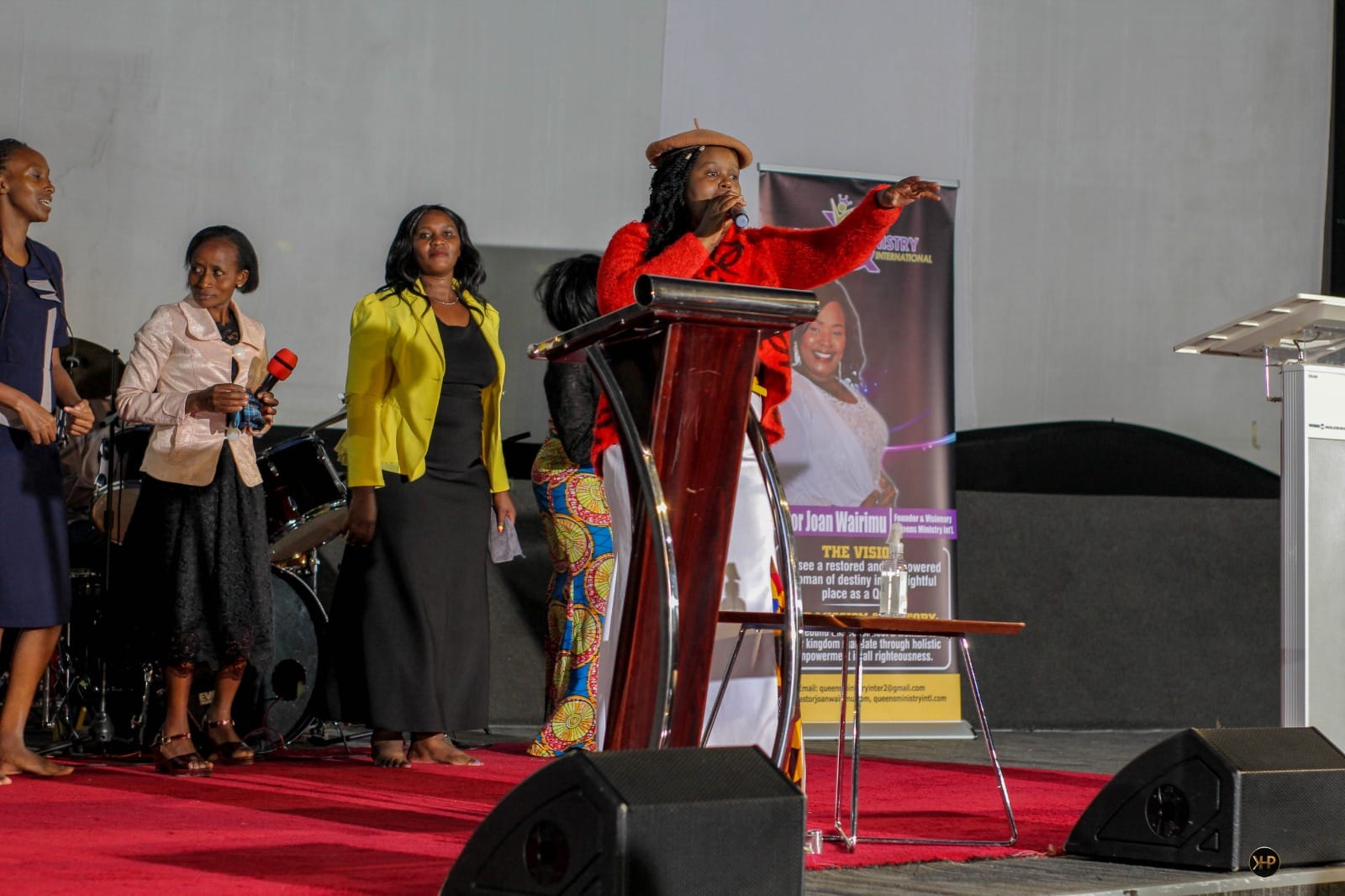
Welcome to Queens Ministry International, a haven of faith, love, and empowerment. Our mission is to rebuild and reconnect a woman to their kingdom mandate through holistic empowerment in all righteousness. Join us in creating a world brimming with compassion and transformation. Contact us to be part of our uplifting community. Connect with us on our Facebook Page for the latest updates and inspiration. Discover the heart of our ministry, where hope thrives, and individuals shine.